Concrete Scanning Experts
What Is Concrete Scanning?
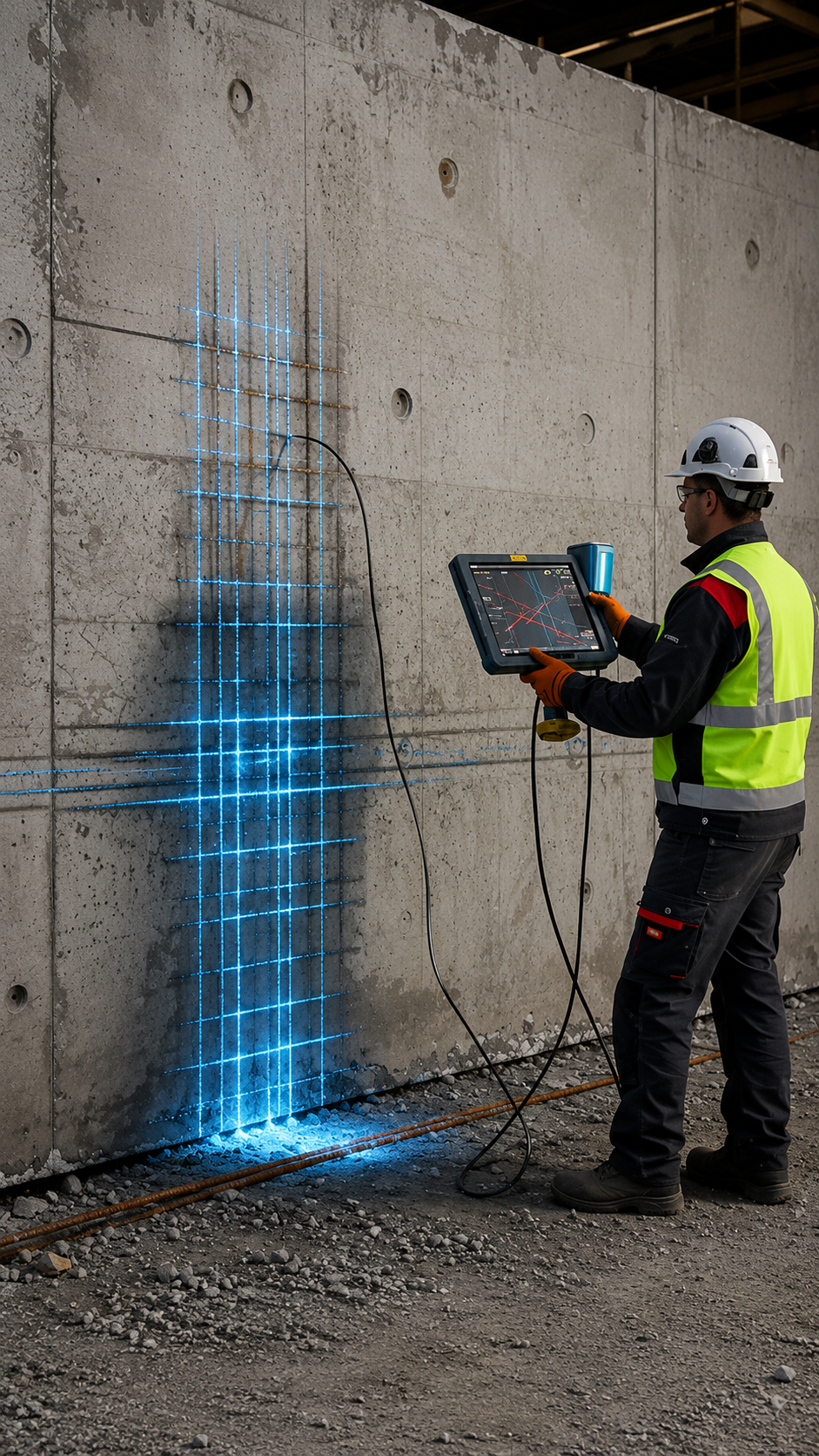
Concrete scanning is a non-destructive method used to identify objects and structural components hidden inside concrete before cutting, drilling, or coring begins. Specialized technology such as Ground Penetrating Radar (GPR) can detect embedded features without damaging the concrete surface.
Professional concrete scanning services can help locate rebar, post-tension cables, electrical conduits, pipes, voids, and other embedded objects within concrete slabs, walls, and structural elements. The collected information helps contractors better understand what is beneath the surface before starting intrusive work.
Using GPR concrete scanning can improve job-site safety, reduce the risk of damaging critical infrastructure, and help prevent costly project delays. It is commonly used in construction, renovation, engineering, utility locating, and structural inspection projects where accurate information about concrete is important.
When Is Concrete Scanning Necessary?
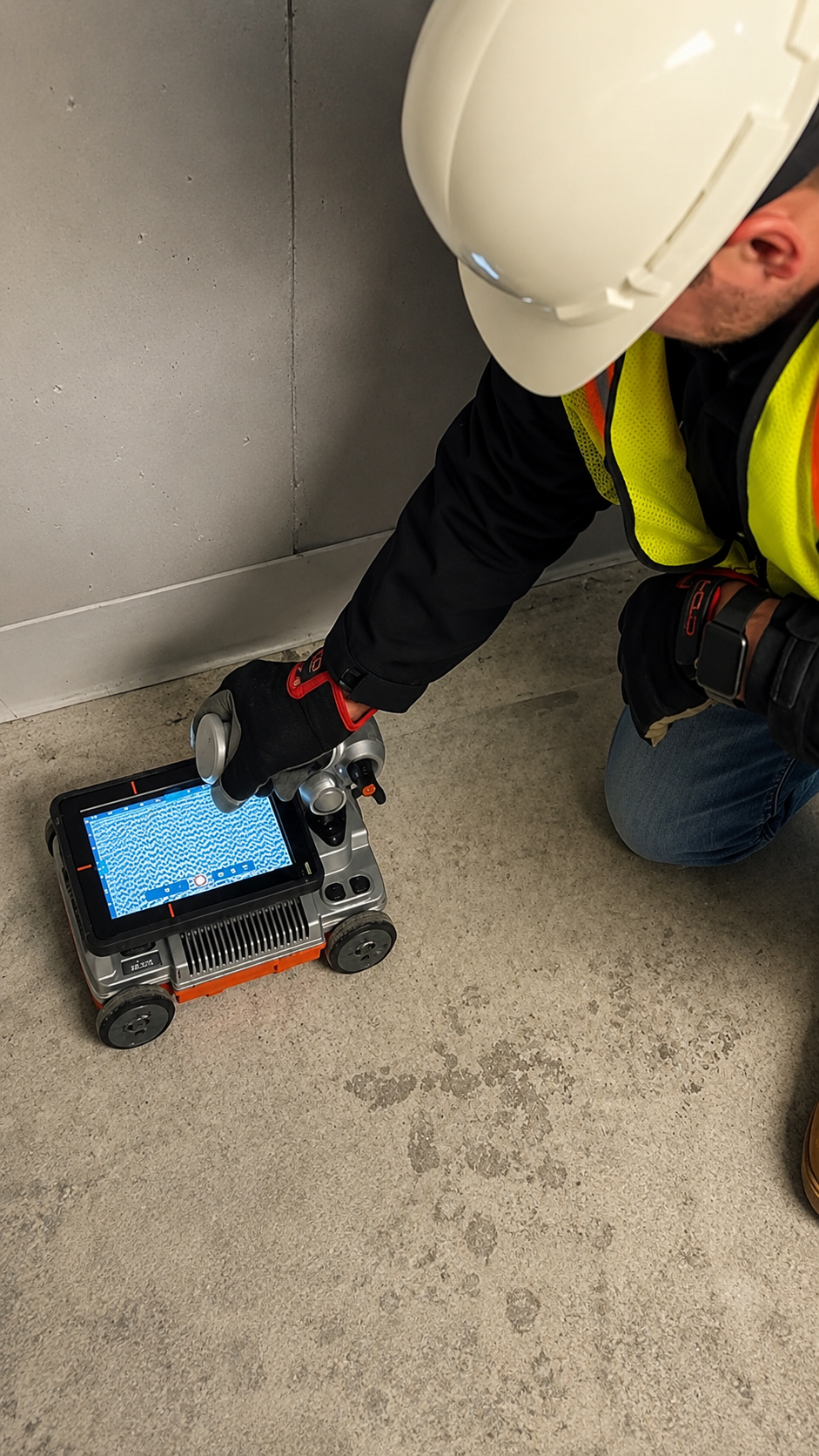
Concrete scanning is necessary whenever drilling, cutting, coring, or other intrusive work is planned on a concrete slab, wall, floor, or structural element. Scanning beforehand can identify hidden objects that could create safety hazards or cause expensive damage if accidentally struck.
A concrete scan is especially important when contractors need to locate rebar, post-tension cables, electrical conduits, plumbing lines, or embedded utilities. It can also be valuable during renovation, demolition, structural modifications, anchor installation, and core drilling projects where existing drawings may not provide complete information.
Scheduling concrete scanning before drilling or cutting helps teams choose safer work locations and make better-informed decisions. Identifying embedded features in advance can reduce the possibility of utility strikes, structural damage, worker injuries, equipment damage, and unexpected construction delays.
What Is Required For Concrete Scanning?
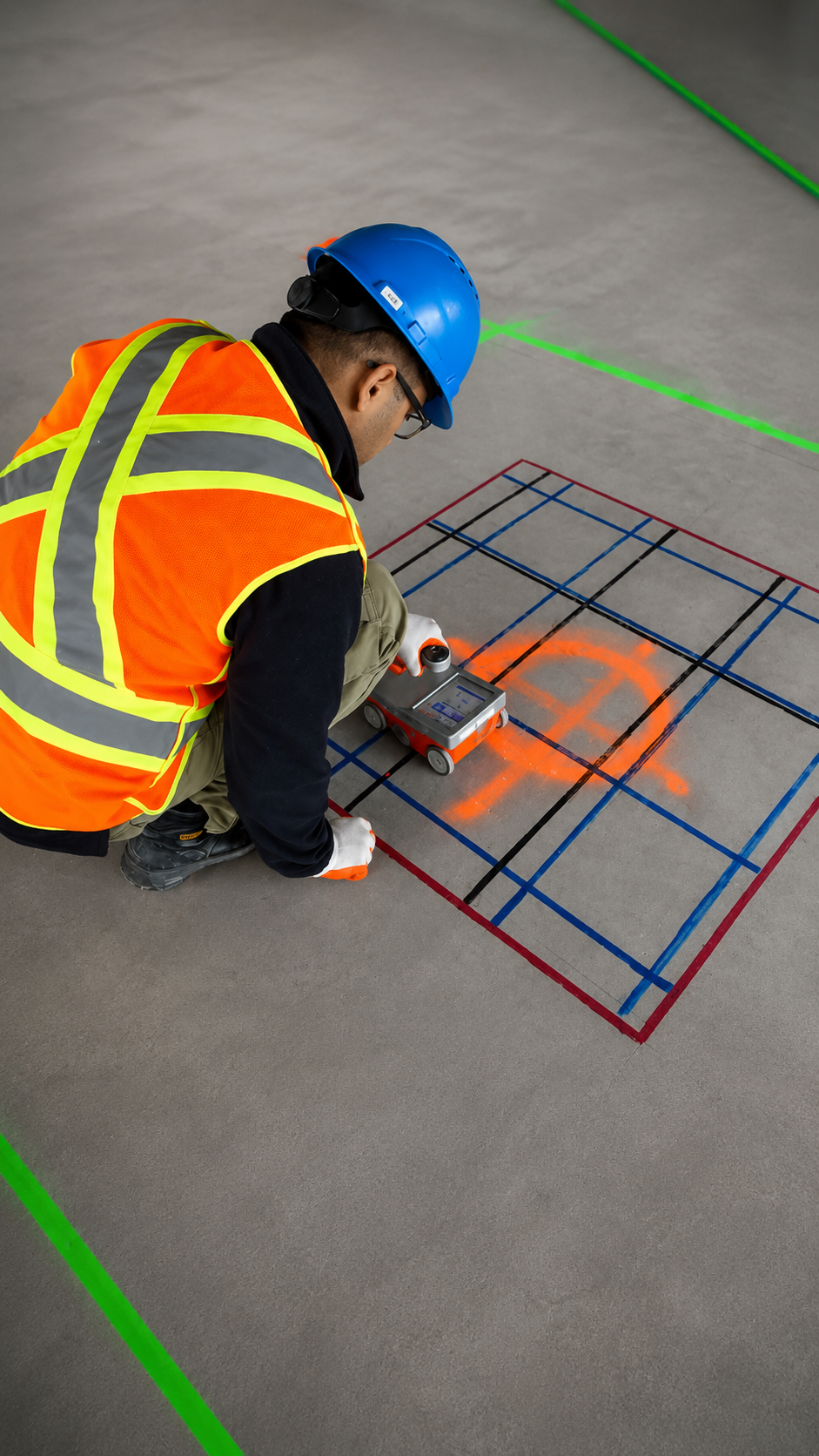
Professional concrete scanning requires appropriate scanning equipment, an experienced technician, and access to the concrete surface being investigated. Ground Penetrating Radar (GPR) is commonly used because it can detect various embedded features while keeping the scanning process non-destructive.
Before a concrete scanning survey begins, the work area should be accessible and the technician should understand the project requirements. Information such as construction drawings, planned drilling or cutting locations, slab details, and known utilities can help determine the most effective scanning approach.
The quality of concrete scanning results can depend on factors such as concrete thickness, reinforcement density, surface conditions, target depth, and accessibility. Using suitable GPR equipment and trained concrete scanning professionals helps provide reliable information for safer drilling, coring, cutting, renovation, and construction work.
Our Reviews
What Our Customers Have to Say About Us!
Very professional and thorough service. They located several underground utilities on our property and clearly marked everything before our excavation work. The team was knowledgeable, responsive, and easy to work with.

We needed utility locating and GPR scanning before starting a construction project. The technician arrived on time, explained the process clearly, and provided accurate results. Excellent communication and professional service.
Great experience from start to finish. They helped us identify underground utility lines and provided detailed mapping that made our project much easier. Fast, reliable, and professional team.
The Process
3 Step Process For Your Concrete Scanning Needs

Contact Us
Start by completing the 'Get a Free Quote' form on our website to share your Concrete Scanning needs with us.

Schedule Your Estimate
Next, we'll arrange a property visit at a time that works for you to provide an in-person estimate for your Concrete Scanning needs.

Get The Job Done
After you approve our estimate, we'll schedule a date to complete the job. Our team will work hard to exceed your expectations!
Request A Free Concrete Scanning Quote
BUSINESS
SERVICES
SERVICE AREAS
OPERATING HOURS
Sun: Closed
Mon: 7:00am - 7:00pm
Tue: 7:00am - 7:00pm
Wed: 7:00am - 7:00pm
Thu: 7:00am - 7:00pm
Fri: 7:00am - 7:00pm
Sat: 7:00am - 7:00pm